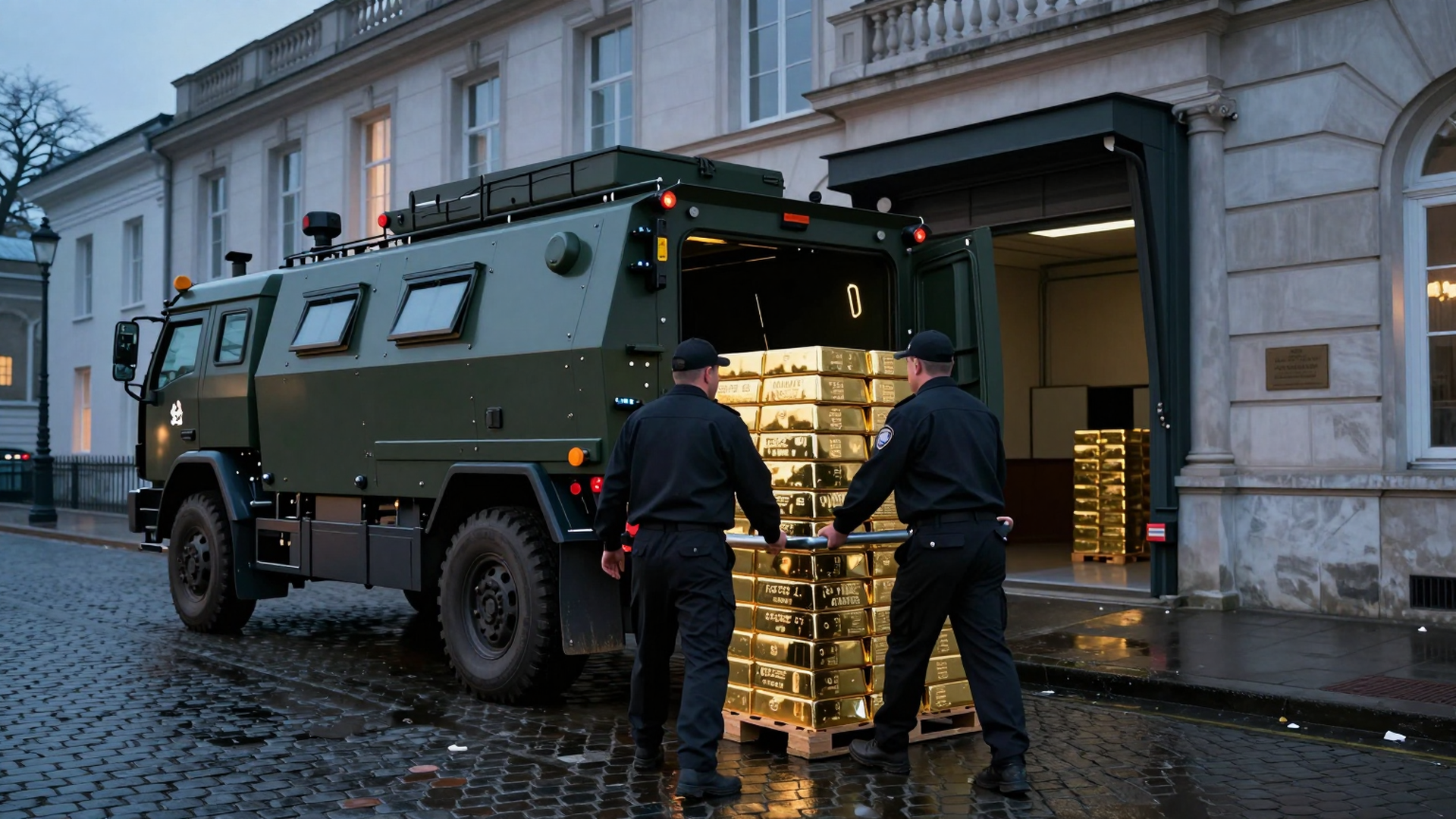
Now they're taking their GOLD home: nations haul bullion out of New York vaults as a $40TRILLION debt spooks the planet - and Uncle Sam is reduced to buying his own IOUs
- Yield on the 10-year Treasury tops 5 per cent - the highest since 2007 - as lenders demand danger money to bankroll America
- The Netherlands quietly shifts much of its 95 tons of gold OUT of the United States, citing "increasing geopolitical unrest"
- France got there first, pulling 129 tons back to Paris in March
- Dollar's share of the world's central bank reserves slides to 56 per cent, down from 64 per cent a decade ago
- Treasury Secretary Scott Bessent to doubters: "I am the house now"
The gold is leaving.
Not in a Hollywood heist, but in armoured convoys, quietly, tons at a time, out of the vaults beneath the Federal Reserve Bank of New York and back across the Atlantic to the countries that own it.
The Dutch central bank confirmed this month it has moved a large part of its 95 tons of North American gold reserves out of the United States, pointing to "increasing geopolitical unrest" and the simple need to be ready for a crisis.
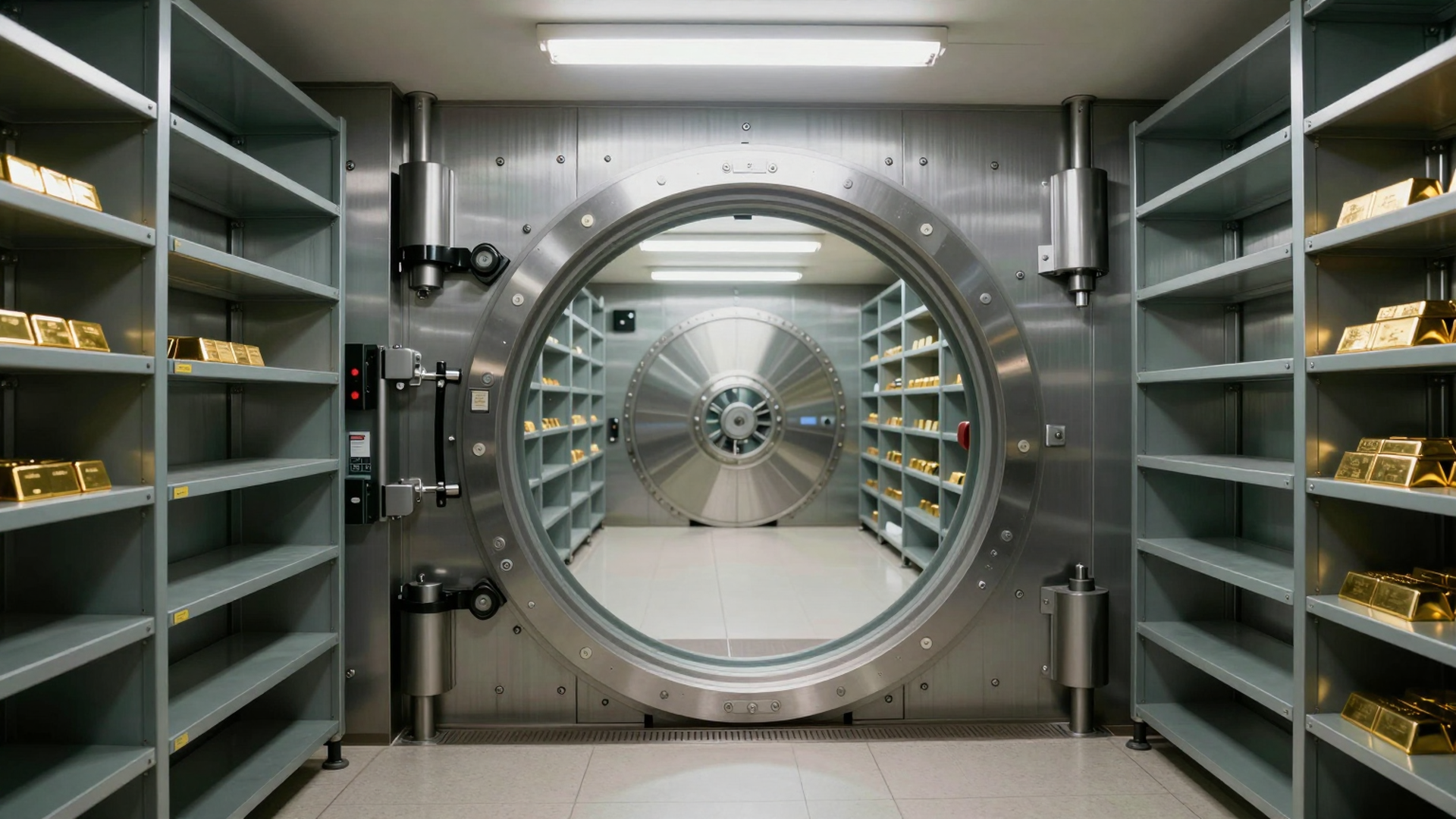
The French beat them to it. In March, the Bank of France hauled 129 tons out of New York and put it in Paris, where it can see it.
Nobody in Washington has threatened to touch anybody's gold. That is not the point. The point is that allies have started to wonder - out loud, in public statements - whether the safest place on earth for their money is still America.
THE NUMBER THAT FRIGHTENS THE LENDERS
Forty trillion dollars. That is the debt pile, and the men who lend against it have begun charging more for the privilege.
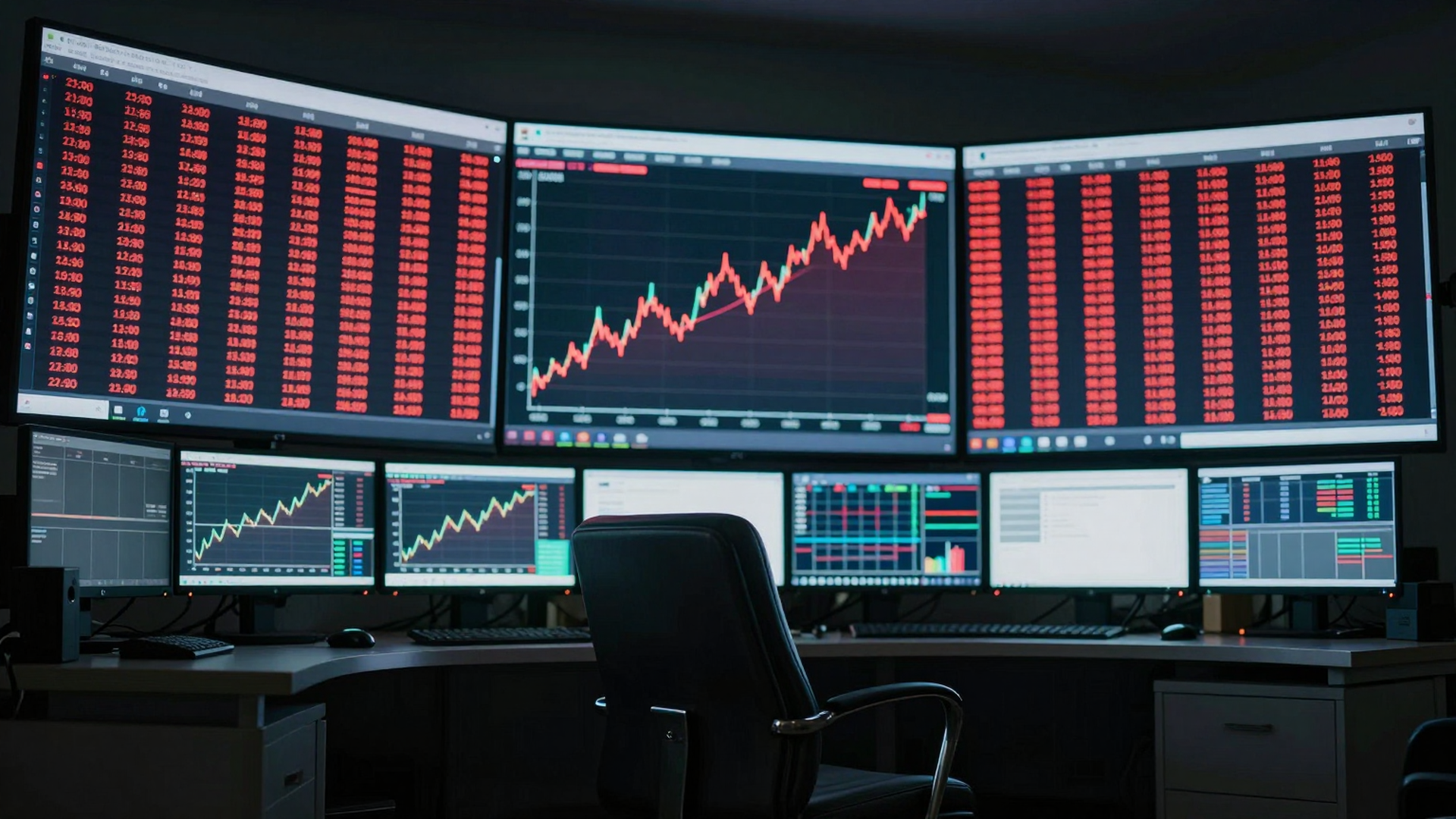
This week the yield on the 10-year Treasury bond climbed above 5 per cent, a level not seen since 2007. Rising yields are not a stock market squiggle: they are the price of American borrowing, and they feed through to mortgages, car loans and the interest bill on the debt itself.
A week before that ominous line was crossed, the Treasury Department went shopping - for its own debt. It bought $5.2billion of bonds maturing over the next 10 to 20 years, an attempt to manufacture demand and push yields back down.
Mr Bessent, who told Congress on Tuesday that he remains confident in the credibility of the American financial system, insists investors are misreading the country's strength. "The U.S. is in fact the leader, and the leader does not fear competition," he said.
At Southern Methodist University last week he was blunter still, daring the market to bet against him: "It's my dream. I have asymmetric information. I am the house now."
AND THE MONEY IS LOOKING FOR THE DOOR
Norway's sovereign wealth fund - the largest on the planet - said this month it intends to trim its holdings of US Treasuries and hunt better returns elsewhere.
Roughly 90 per cent of the world's foreign exchange transactions still run through the dollar, and no rival is about to knock it off its perch. But the share of dollars sitting in central bank reserves has been sliding for a decade: 56 per cent at the end of 2025, against 64 per cent in 2015.
Eswar Prasad, formerly head of the International Monetary Fund's China division, put the cause plainly: geopolitics, and Washington's habit of turning the dollar into a weapon through sanctions, are pushing central banks to diversify away from dollar assets.
THE SANCTIONS THAT CUT BOTH WAYS
America spent this year trying to scale back its sanctions habit, precisely because the habit was driving other countries to build financial plumbing that Washington cannot reach.
Then in August came Operation Economic Outcast, Mr Bessent's initiative to strangle Iran's economy, with secondary sanctions threatened against any country still trading with Tehran. The Treasury Secretary himself conceded that making good on the threat could "blow up the global financial system".
The alternatives are already under construction. China is leading a cross-border digital currency platform called mBridge with Hong Kong, Thailand, the United Arab Emirates and Saudi Arabia. Russia and India said last week they are working on settling trade between them in central bank digital currencies, out of reach of Western banks.
"Countries have thought about working around the dollar," said Josh Lipsky of the Atlantic Council, "and technology is making it a little cheaper and easier to do it than before."
GOLD AT $5,000 - AND CLOSER TO HOME
In 2025, the world's reserves held in gold overtook foreign official holdings of US Treasury securities. This year the metal passed $5,000 a troy ounce for the first time in history as central banks stocked up.
Daniel Tannebaum, once the Treasury's compliance coordinator for the New York Fed, described the mood among allies in one line: "It's like the countries don't trust the U.S. I do think that there is a fear factor."
That fear is spreading beyond bond desks. European firms, he says, are now wary of building sensitive industries such as artificial intelligence on American technology, in case Washington one day switches it off - as it has during disputes with China and Russia.
Private money is still pouring into American markets. The AI boom is roaring. No currency is poised to topple the dollar tomorrow.
But the vault doors in New York are opening, and the gold is going home.
DON'T MISS

First Year Law: Contracts
Forty-nine lectures with Prof. Ruth Castellano, and the whole Contracts book given away free.
Start lecture one
True Confessions
What our readers get up to once the lights go out, in their own words. Strictly over-eighteens.
Read them all
The Keeping
A lighthouse keeper, a bell, and forty-one years of fog. Made end to end by a render farm.
Watch the film
Dark Tales of Washington
The scandals the capital would rather you had forgotten. Sixteen episodes.
Start watching
The Land Beneath Us
The treaties under your feet, told plainly and without the flag-waving.
Start watching
The Rewatch
Golden Girls, episode by episode, by two people who have clearly seen it too many times.
Start watching
Pirates & Plunder
Real pirates, real plunder, considerably less rum than the films promised.
Start watching